

TO-247-3 SiC Schottky diodes
SiC Schottky diodes in the TO-247-3 package: common cathode
1200 V · up to 40 A · 2 parts
Overview
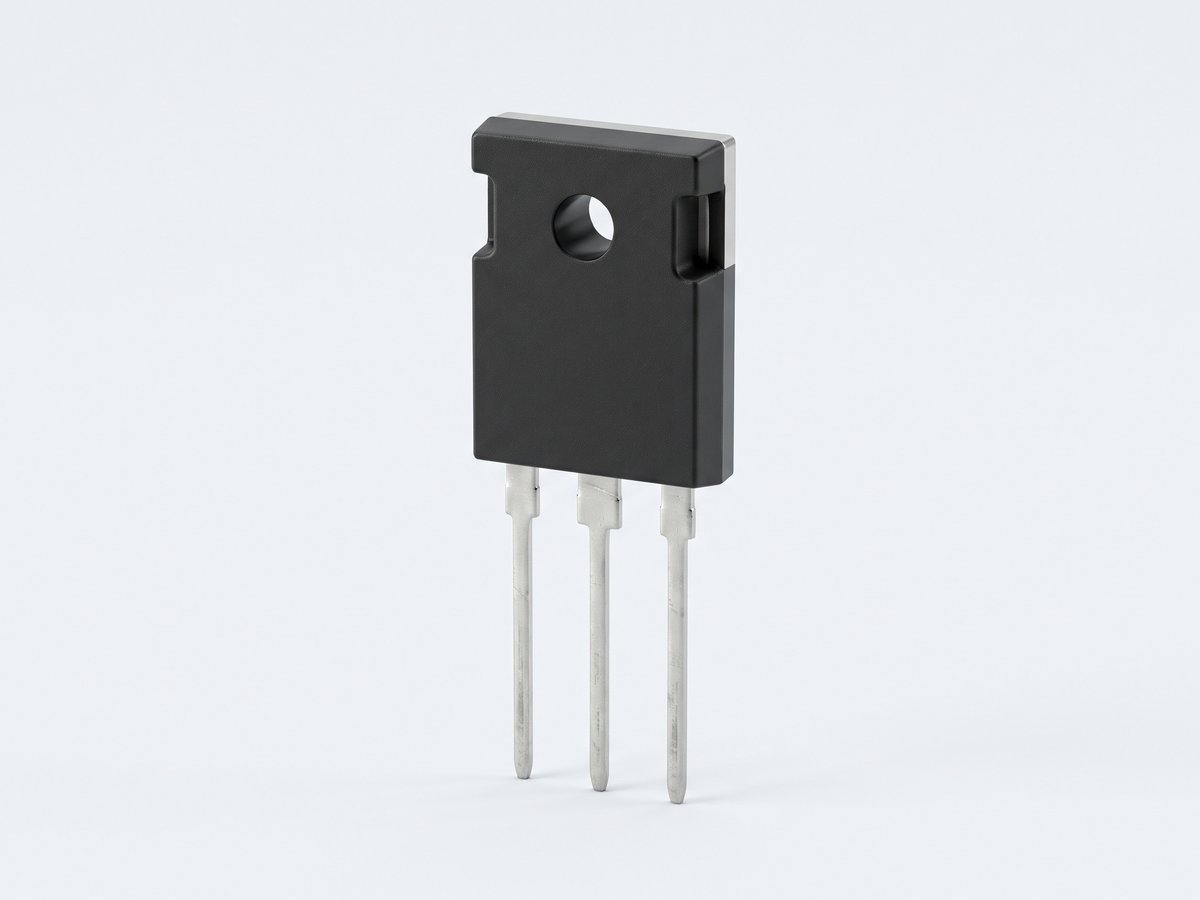
This TO-247-3 holds two SiC Schottky diodes that share a cathode: two anode leads and one common cathode in a single through-hole package.
Two currents that feed the same positive node, such as the two halves of a centre-tapped rectifier or two interleaved boost phases, can share one package and one heatsink position.
IRONHAWK lists two 1200 V common-cathode parts, at 20 A and 40 A.
When to use
- Centre-tapped output rectifiers in high-voltage DC/DC converters.
- Two-phase interleaved PFC boost stages with a common output.
- A single higher-current diode, made by tying both anodes together.
Parts
| Part number | Configuration | VRRM (V) | IF (A) | Datasheet | Quote |
|---|---|---|---|---|---|
| IHSS12A020T3 | Common cathode | 1200 | 20 | Datasheet | Get quote |
| IHSS12A040T3 | Common cathode | 1200 | 40 | Datasheet | Get quote |
Details
Configurations
- Common cathode (2)
Common features
- Zero reverse-recovery current
- Switching behaviour independent of temperature
- Positive temperature coefficient of VF for easy paralleling
Design notes
- Both diodes sit on one tab, so each one's loss heats the other. Size the heatsink for the sum of both losses.
- Check which terminal the tab is tied to; it is live, so use an insulator unless the heatsink sits at that potential.
- Confirm which lead is which on the datasheet drawing before laying out the footprint.
- Inrush and surge apply to each diode separately; check IFSM per diode against start-up conditions.
- At 1200 V, check lead-to-lead creepage and clearance on the package drawing against your insulation standard.
FAQ
Is the current rating per diode or for the whole package?
Check the datasheet; common-cathode parts can state IF per leg and per device. Size each diode for its own current and the package for the total.
Can I join both anodes to make one larger diode?
Yes. Forward voltage rises with temperature at high current, and both diodes share one tab, so they run at similar temperatures and share current well.
When should I use two single diodes instead?
When the two diodes block different voltages, sit in different places in the circuit, or together dissipate more than one package position can handle.
20 A or 40 A?
Size each leg from its average and peak current at the junction temperature you will reach, then check capacitive charge at your switching frequency.